
In today’s digital world, with over 2.77 billion people shopping online, an in-depth understanding of marketing funnels and their impact on your business is no longer an option but a vital part of your marketing strategy.
Marketing is often described as the lifeblood of a business, and for good reason. Its core purpose is simple: attract the right prospects, convert them into customers, turn those customers into repeat buyers, and eventually loyal advocates. However, without a clear strategy guiding these various points of contact, marketing quickly turns into an endless loop of trial and error, leading to inconsistent results and stalled business growth. This is where the marketing funnel comes in.
As more and more people become unpredictable in their purchasing decisions, a well-planned marketing funnel is essential for creating marketing campaigns that feel relevant, timely, and effective.
In this guide, we’ll break down what a marketing funnel really is, why it matters, the stages involved, and how to apply it practically in your business. Let’s dive right in…
What is a Marketing Funnel? (A Simple Definition)
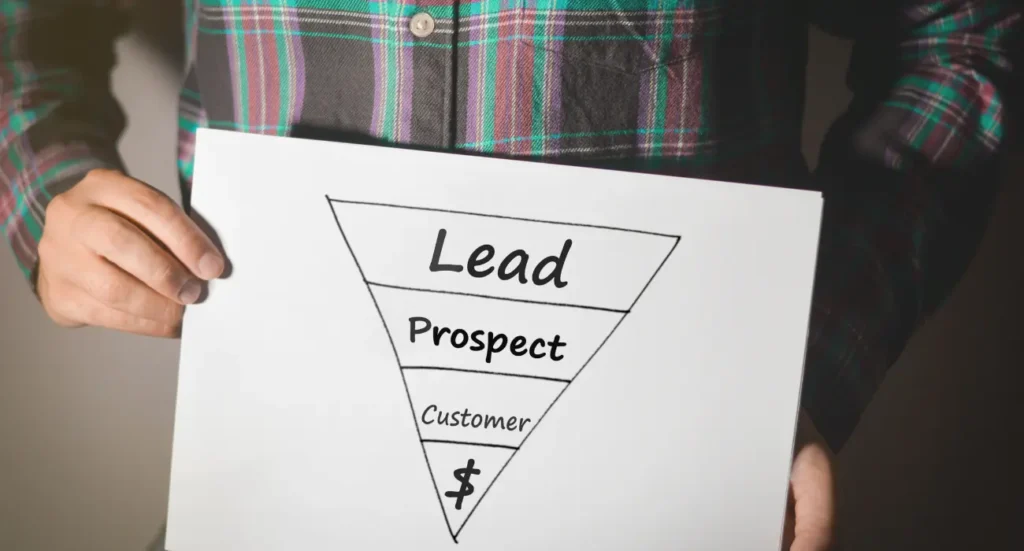
A marketing funnel is a structured sequence of stages that guides a potential customer from their very first interaction with your brand to conversion, and eventually, loyalty. In simpler terms, it maps the buyer’s journey from “Is this even for me?” to “This brand is amazing, I can’t recommend it enough!”
It’s called a funnel because, just like the household tool, the influx of prospects narrows as people move through it. What do I mean by this? Well, not everyone who comes across your business will become a customer. You might attract 1,000 website visitors or ad clickers, but only a fraction will buy, and only an even smaller number will stay loyal. The funnel helps you see where prospects move forward with purchase, where they drop off, and why those decisions are made.
Why a Marketing Funnel Matters for Your Business Growth
Now that you know what a marketing funnel is, the next step is understanding why your business should use it. Here are a few reasons why:
1. It increases conversion and lead generation
Marketing funnels are often illustrated as simple, linear paths. However, in reality, buyers don’t always follow a straight line to make purchasing decisions. They pause, compare, leave, return, and reconsider before eventually buying or not.
Without a digital marketing funnel, businesses often chase visibility without conversions or pursue sales when they should be pursuing trust. This leads to wasted marketing efforts, low engagement, and an audience that is more repelled than attracted.
2. It improves your customer targeting and provides data insight
A funnel also helps you align your marketing with your prospects’ current stage of awareness. Prospects don’t wake up suddenly and buy from you at first contact (though some rare instances may present themselves).
They move through funnel stages, consuming your content at each stage, gradually making a negative or positive decision as they move down your funnel. Funnels help you serve the right message at the right moment.
It gives you insights that help you improve specific parts of your strategy instead of starting from scratch or tweaking blindly, playing chess with your business.
3. It helps build consistency in your marketing
Most importantly, funnels create consistency. Once set up, they allow your marketing to work continuously, attracting, nurturing, and converting leads even when you’re not actively selling. A funnel becomes your 24/7 salesperson and makes sales for you while you sleep.
The Stages of a Marketing Funnel (Explained Simply)
Each stage of the funnel serves a specific purpose and requires a different message. When your messaging aligns with where your prospects are in their buying journey, marketing stops feeling manipulative or desperate and starts feeling natural, relevant, and right on point.
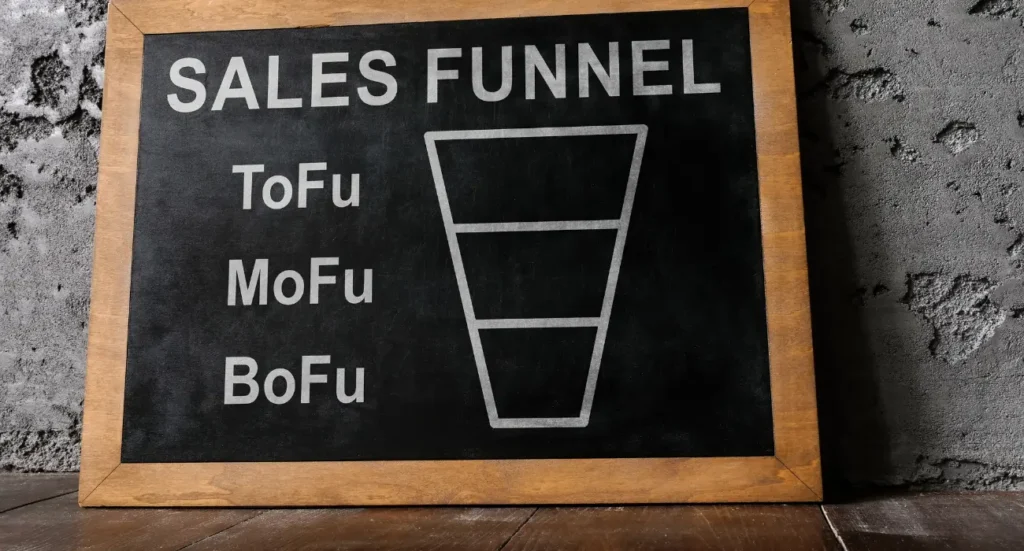
You may have come across various customized stages of the marketing funnel, but most follow three core stages commonly known as TOFU, MOFU, BOFU, and then a fourth stage, Post-Purchase. Here’s a breakdown of each stage:
1. Top of the Funnel (TOFU): Awareness
This is where people first discover your brand. The stage where they become aware you exist. At this stage, your audience is not looking to buy. They’re searching for information, answers, or solutions to a problem. Your goal here is visibility and relevance, not sales.
The aim is to position your brand as helpful and credible while attracting the right audience into your ecosystem.
2. Middle of the Funnel (MOFU): Consideration
This is where interest turns into evaluation. Your audience now understands their problem and is considering different options. They want clarity, proof, and reassurance. This is where trust is built.
The goal is to deepen the relationship and show why your solution makes sense for their specific situation.
3. Bottom of the Funnel (BOFU): Conversion
This is the decision stage. Your audience is ready to act but needs a final push; clarity on pricing, guarantees, benefits, or urgency. At BOFU, you’re not convincing them to want the solution; you’re showing them why your brand is the right choice.
4. Post-Purchase (Loyalty)
The funnel doesn’t end at the sale. The post-purchase or loyalty stage focuses on turning first-time buyers into repeat customers and brand advocates. At this stage, the goal is retention, not persuasion. When customers feel supported after buying, they’re more likely to return, leave positive reviews, and recommend your business to others.
In many cases, this stage is where real growth happens, because it’s often cheaper to retain an existing customer than to acquire a new one.
How to Implement Full Funnel Marketing in Your Business
A marketing funnel only works when it’s fully implemented from stage to stage. Full-funnel optimization helps you capture attention, build trust, and convert customers at every stage of the journey. Below are practical steps you can use to implement a funnel strategy in your business.
1. Start by Mapping Your Customer Journey
A full-funnel strategy begins with understanding how people move from discovering your brand to becoming paying customers. Identify where your audience first finds you, the questions they ask along the way, and the factors that influence their decisions.
This mapping helps you design each stage of your funnel with intentionality instead of relying on guesswork.
2. Attract the Right Audience at the Top of the Funnel
Top-of-funnel marketing is about visibility and relevance. Focus on content and channels that help potential customers discover your brand organically through SEO, blog content, social media, and educational videos.
3. Build Trust and Nurture Leads in the Middle of the Funnel
As prospects move deeper into the funnel, they begin evaluating their options. This is where trust-building becomes critical. Use email marketing, lead magnets, case studies, testimonials, and educational resources to demonstrate credibility and position your business as a reliable solution. At this stage, consistency and clarity matter more than aggressive selling.
4. Convert with Clear and Focused Bottom-of-Funnel Marketing
By the time prospects reach the bottom of the funnel, they’re close to making a decision. Your marketing should now reduce friction and reinforce confidence in your product or service. This includes clear landing pages, compelling calls to action, and transparent, enticing offers.
5. Extend the Funnel Beyond the Sale with Post-Purchase Marketing
A full-funnel strategy doesn’t stop at conversion. Post-purchase efforts focus on retention and loyalty through follow-up communication, onboarding, customer support, reviews, and repeat offers. This stage turns customers into long-term assets and brand advocates, often delivering the highest return on investment.
6. Measure, Refine, and Scale What Works
Each stage of your funnel should be tracked and optimized. Instead of asking why marketing isn’t working, funnels allow you to pinpoint exactly where prospects are dropping off so you can improve that specific stage. Over time, this creates a predictable and scalable marketing system.
Common Marketing Funnel Mistakes Businesses Make
- Trying to sell at the awareness stage
- Skipping the middle of the funnel
- Using the same content for every stage
- Not tracking funnel performance
- Overcomplicating the funnel setup
Frequently Asked Questions About Marketing Funnels
How long does it take to see results from a marketing funnel?
It depends on your traffic source and consistency. With paid ads, you may see results in weeks. With organic channels like SEO or content, it can take a few months. What’s worthy of note is that funnels compound over time; the longer they run, the better and more predictable the results become.
Can I build a marketing funnel without paid ads?
Definitely, you can build a marketing funnel using organic channels like SEO, social media, email marketing, content marketing, and referrals. Paid ads simply speed things up; they’re not a requirement.
What’s the difference between a marketing funnel and a sales funnel?
A marketing funnel focuses on attracting and nurturing people before they’re ready to buy by building awareness, interest, and trust through content and education. A sales funnel picks up when buying becomes a real possibility, guiding those warmed-up prospects toward a decision, payment, and follow-up. Marketing warms the audience, sales closes the deal.
Final Thoughts
Most people don’t buy the first time they see your brand. Funnels exist to guide their journey, moving people from Google, social media, or ads into channels you own, like your email list, where trust can grow, and relationships can form.
A marketing funnel gives your marketing a backbone. It ensures you’re not pushing out the same message to everyone, but meeting people where they are and guiding them forward step by step.
At Techdella, we help small businesses turn misaligned marketing efforts into clear, connected funnel strategies across all stages. Book a discovery call with Techdella, let’s build a funnel that meets your audience where they are and moves them forward. Let’s make your funnel work for you.
Strategy, execution, and growth systems for founders building in Nigeria and scaling everywhere.
Join the first 50 founders building the next wave of African tech.

Using SEO Marketing to Attract Holiday Shoppers to Your Website
One of the busiest shopping seasons of the year is the holiday season, and your…
Read →
Effective Email Marketing for Consultants in 2026
Learn how to create compelling campaigns and why TechDella is the go-to email marketing consultant…
Read →
Local SEO: Definition and Its Impact on Your Business
Improve your local presence and sales with effective local SEO strategies. Learn how to enhance…
Read →