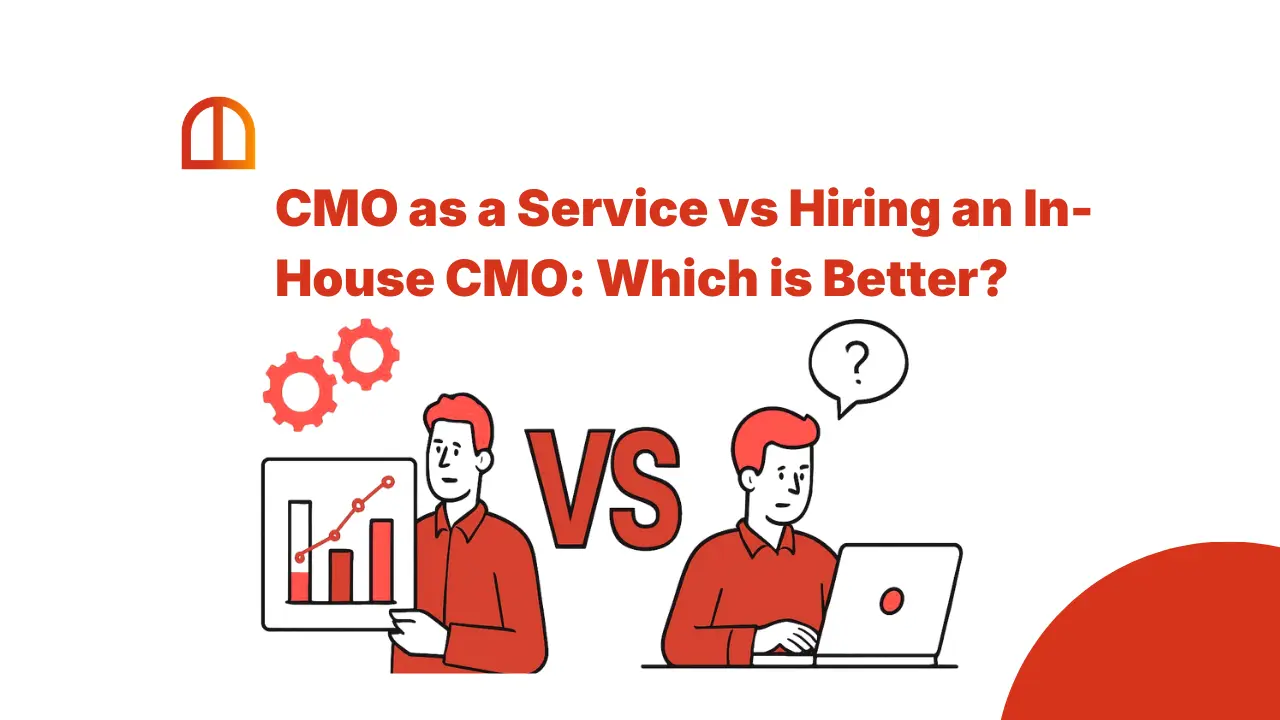
Choosing between CMO as a service vs an in-house CMO is not simply a hiring decision. It is a leadership decision that directly affects clarity, speed, and long-term growth.
Most companies reach this crossroads when marketing activity increases, but outcomes remain unclear. Campaigns are live. Tools are running. Teams are busy. Yet direction feels missing. This is often the moment when marketing leadership outsourcing enters the conversation, not because teams lack effort, but because they lack focus.
This guide breaks down how each model works in practice, the tradeoffs founders often underestimate, and how to choose the right option based on business stage rather than trend.

What the CMO Role Is Designed to Do
A Chief Marketing Officer exists to provide direction, not volume.
The role connects business goals to execution by answering key questions early. Who are we targeting? Why should buyers choose us? Which channels matter now, and which should wait?
A strong CMO typically oversees:
- Brand positioning and messaging
- Demand generation strategy
- Channel sequencing and prioritization
- Alignment across teams and partners
- Measurement and performance clarity
The difference between CMO as a service vs in house CMO is not authority. It is how leadership is delivered and how much flexibility the business keeps.
What CMO as a Service Actually Means
CMO as a service is built on fractional leadership models, often overlapping with how fractional CMO jobs are structured in modern organizations.
Instead of hiring a full-time executive, companies gain access to senior marketing leadership on a flexible engagement.

This model is designed for businesses that need guidance before they scale execution. It allows teams to test direction, refine positioning, and align channels without committing to a permanent structure too early.
In practice, this model provides leadership that is outcome focused, not activity driven. A key advantage is access to marketing on demand, allowing founders to make informed decisions quickly instead of guessing or copying competitors.
The In House CMO Model in Real Life
An in-house CMO is deeply embedded in the organization. They manage internal teams, own long term vision, and influence company culture.
This model works best when the business is already stable, and marketing complexity justifies a permanent executive role. For early stage companies, however, hiring too soon can introduce friction. Many founders discover that startup marketing strategy evolves rapidly, and early assumptions rarely hold.
Locking into a full time role before direction is clear can slow learning instead of accelerating it.
Cost, Speed, and Flexibility Compared
This is where the difference becomes practical. A full time CMO comes with fixed costs. Salary, benefits, onboarding time, and long term commitment are required regardless of performance.
CMO as a service offers flexibility. Engagements can expand or contract as priorities shift, allowing companies to build marketing operations that scale without forcing premature hiring decisions.
Speed also matters. While executive recruitment can take months, CMO as a service often begins immediately. That speed is critical when momentum is fragile.
How Each Model Shapes Growth Strategy
Growth rarely fails from lack of effort. It fails due to a lack of alignment.
CMO as a service often excels at shaping early marketing strategies with intention. Channels such as Marketing Automation are aligned to outcomes rather than operated in isolation.
As strategy matures, attention shifts toward launches, expansion, and positioning. This is where a clear go to market strategy becomes critical, ensuring that messaging, offers, and channels support the same objective.
In house CMOs tend to perform best once scale is established. They manage complexity well, but discovery is not their primary strength.
Using Social Channels With Intent, Not Noise
Many companies are active online but lack direction. Posting frequently does not equal progress. Effective social media marketing requires purpose, not presence.

Leadership defines what role social plays in the broader system. Is it for awareness, education, trust, or demand support? Once that is clear, content becomes focused and measurable.
Instead of chasing every platform, teams invest where their audience actually engages. Messaging becomes consistent. Performance improves because effort is concentrated.
Turning Strategy Into Executive-Level Decisions
Marketing leadership is not about doing more. It is about choosing better. At the executive level, clarity matters more than activity.
A strong leader provides marketing strategy examples that guide teams without overwhelming them. Instead of reacting to trends or copying competitors, decisions are grounded in long term direction.
This is where leadership transforms effort into impact. Budgets become intentional. Priorities become obvious. Teams move with confidence instead of urgency.
When CMO as a Service Is the Smarter Choice
CMO as a service delivers the most value when:
- Strategy matters more than volume
- Marketing feels busy but unfocused
- Leadership is needed without long term risk
- Growth has slowed or become unpredictable
- The company is preparing for scale or investment
For many founders, this becomes a strategic bridge rather than a permanent replacement.
When Hiring an In House CMO Makes More Sense
An in house CMO is often the right choice when:

- The business has stable traction
- Teams are already large and structured
- Long term brand stewardship is required
- Daily internal management is essential
At this stage, continuity often outweighs flexibility.
Why Leadership Still Matters More Than Channels
Tools change. Platforms evolve. Channels rise and fall. What remains constant is the need for direction.
Without leadership, even strong channels like SEO Marketing underperform. Teams execute without understanding why. Budgets get spread thin. Results become inconsistent.
Strong leadership connects intent to action. That is the real difference between activity and impact.
Frequently Asked Questions
Is CMO as a service only for startups?
No. While CMO as a service is popular among startups, it is not limited to early stage companies. Many growing and mid sized businesses use this model when they need senior marketing leadership without the cost and commitment of a full time executive.
Can a fractional CMO replace an in-house CMO?
In certain stages, yes. A fractional CMO can fully replace an in-house CMO when the primary need is direction, positioning, and strategic alignment. Many companies use CMO as a service as a temporary or long term solution until the business reaches a level of complexity that justifies a permanent hire.
Does CMO as a service handle execution?
The core focus is leadership, strategy, and decision making. Execution is usually handled by internal teams, agencies, or partners. However, a CMO as a service often oversees execution to ensure work aligns with strategy and produces measurable outcomes.
Which model supports faster growth?
CMO as a service often delivers faster clarity and momentum in the early and growth stages. In house CMOs tend to perform better once scale, team structure, and long term brand management are already established.
When should a company switch from CMO as a service to in house?
A switch makes sense when marketing systems are stable, direction is clear, and daily internal leadership becomes more valuable than flexibility.
Conclusion
The decision between CMO as a service vs in house CMO is not about titles. It is about timing. If your business needs direction, flexibility, and senior leadership without long term risk, CMO as a service offers a practical advantage.
If your company is stable and complex, an in house CMO may be the right long term investment. The strongest companies choose based on stage, not ego.
If you want help deciding which model fits your business or need experienced marketing leadership without committing too early, Techdella can help you map the right path forward with clarity and confidence.

I’m Ayomide, a content writer at Techdella. I love breaking down complex ideas into simple, easy-to-read content and keeping people in the loop about what’s happening in the digital world. I’m usually online checking out new trends and ideas, which helps me create content that feels fresh, relatable, and engaging.
Get it in your inbox
One email a week. Real startup marketing insights — no filler.
Join 1,400+ founders. Unsubscribe anytime.
You're in!
Thanks for subscribing. Your first issue will arrive shortly.