
A landing page has one job, to turn attention into action. Yet many businesses struggle with low conversions, not because they lack traffic, but because their landing pages fail to guide visitors clearly. When users feel confused, distracted, or unsure of the next step, they leave, even if they were interested when they arrived.
This guide breaks down exactly what a landing page is and how to create a landing page that increases conversions. You will learn how to structure your page around user intent, remove friction, and design with clarity so visitors understand the value quickly and feel confident taking action.

What Is a Landing Page
A landing page is a focused web page created to drive one specific action. Unlike a regular website page, a landing page removes distractions and guides visitors toward a single goal.
That goal could be to:
- Sign up for an email list
- Book a consultation
- Download a resource
- Register for an event
- Make a purchase
A landing page is usually connected to a campaign. Visitors arrive from ads, emails, social media, or search. The page exists to convert that attention into action.
Why Most Landing Pages Fail to Convert
Landing pages underperform because of friction. Visitors arrive with intent but leave when the experience feels unclear or overwhelming.
Common issues include:
- An unclear value proposition
- Weak or generic headlines
- Multiple competing calls to action
- Slow loading speed
- Missing trust signals
- Poor mobile layout
How to Create a Landing Page That Increases Conversions
Creating a high converting landing page starts with understanding user behavior, intent, and the core principles of conversion rate optimization. People arrive with intent, scan quickly, and decide within seconds whether to stay or leave. The steps below focus on reducing friction, guiding attention, and making the next action clear.
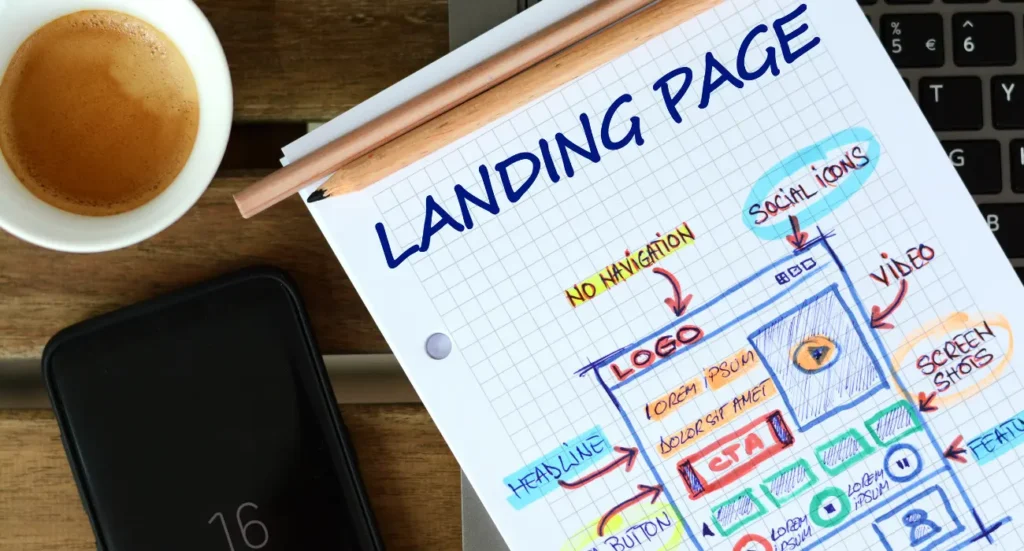
1. Start With One Clear Conversion Goal
Every high performing landing page focuses on a single outcome.
Before designing the page, define what success means:
- Email signups
- Demo bookings
- Product purchases
- Resource downloads
2. Craft a Headline That Communicates Value
The headline is the most important element on the page. It determines whether visitors stay or leave.
A strong headline should:
- Be clear and direct
- Focus on a specific benefit
- Explain the value within seconds
Clear headlines also support SEO-Friendly Landing Pages by helping users and search engines understand the purpose of the page immediately.
3. Structure the Page for Easy Scanning
Visitors scan before they read. Your page layout should guide the eye naturally.
Use:
- Short paragraphs
- Clear subheadings
- Bullet points for benefits
- Adequate spacing
4. Highlight Benefits Before Features
Features explain functionality. Benefits explain outcomes.
Effective landing pages focus on what changes for the visitor:
- Time saved
- Effort reduced
- Results improved
- Decisions simplified
5. Build Trust Before Asking for Action
Trust must come before conversion.
Effective trust elements include:
- Testimonials
- Client logos
- Reviews
- Security indicators
- Clear contact details
6. Design a Clear and Focused Call to Action
The call to action should be obvious, specific, and aligned with intent.
Avoid vague labels like Submit or Learn more. Instead, use outcome driven language such as:
- Get the free guide
- Book a demo
- Start my trial
7. Optimize Page Speed and Performance
Slow pages lose conversions quickly because page load speed directly affects trust, engagement, and user decisions.
Key improvements include:
- Compressing images
- Reducing unnecessary scripts
- Prioritizing mobile speed
Understanding How to Optimize Images for SEO helps improve load time while preserving visual quality.
8. Match the Landing Page to the Traffic Source
Landing pages must align with how visitors arrive. Ads, emails, and campaigns create expectations. The page must fulfill that promise.
For example:
- Email campaigns should land on message-aligned pages
- Seasonal promotions need dedicated pages
- Campaigns such as Black Friday Email Campaign Ideas require urgency-focused layouts
9. Support Conversions With SEO Strategy
Landing pages can support both paid and organic traffic when built correctly.
They work best when aligned with:
- On-Page SEO for Local Businesses through relevance, structure, and location signals
- Authority support from Off-Page SEO Strategies, such as backlinks and brand mentions
10. Test, Measure, and Improve Over Time
High-converting landing pages are built through testing.
Elements worth testing include:
- Headlines
- Button copy
- Form length
- Layout and spacing
Common Landing Page Mistakes to Avoid
Avoid these frequent errors:
- Too much information
- Hidden or unclear calls to action
- Asking for excessive details
- Ignoring mobile users
- Skipping testing
Frequently Asked Questions
What is the main purpose of a landing page
The main purpose of a landing page is to guide visitors toward one specific action. This could be signing up, booking a call, downloading a resource, or making a purchase. A landing page removes distractions and focuses attention on a single goal to increase conversions.
How is a landing page different from a homepage
A homepage is designed for exploration. It introduces your brand, services, and multiple pathways. A landing page is designed for conversion. It focuses on one offer, one message, and one call to action, making it more effective for campaigns and targeted traffic.
What makes a landing page highly converting
A high converting landing page has a clear headline, strong benefits, visible trust signals, and a focused call to action. It loads quickly, works well on mobile devices, and matches the intent of the visitor. Most importantly, it removes friction and makes the next step obvious.
Conclusion
A landing page that increases conversions is built on clarity, focus, and trust. When visitors understand the value quickly and know exactly what to do next, results improve naturally. Strong headlines, simple structure, and clear calls to action remove friction and guide decisions.
If your landing pages are not converting as expected, start with one page. Review the message, remove distractions, and test small improvements. If you want expert support to refine your landing pages and turn traffic into results, book a discovery call with Techdella and take the next step toward higher conversions.
Strategy, execution, and growth systems for founders building in Nigeria and scaling everywhere.
Join the first 50 founders building the next wave of African tech.
Steps to Launching a Successful E-Commerce Startup
The process of launching an e-commerce startup requires significant effort, including forecasting retail trends and…
Read →
Top 10 eCommerce Marketplace Platforms For Your Business
Top 10 eCommerce marketplace platforms for online sellers: Shopify, Amazon, Alibaba, and more. Compare and…
Read →
How You Can Do a CRO Audit for Your Business Website
Is your website getting traffic but struggling to convert visitors into customers? A comprehensive CRO…
Read →