
If you are building a startup, one of the fastest ways to run out of money is by overspending on growth. That is why learning how to reduce customer acquisition cost early can determine whether your startup survives or struggles.
You do not need a massive budget to grow. What you need is a smarter approach. When you focus on the right channels, messaging, and systems, you can reduce customer acquisition cost while still scaling.
In this guide, you will learn practical ways to cut costs, improve conversions, and build a more efficient growth engine.
What Is Customer Acquisition Cost?
Before you can reduce customer acquisition cost, you need to understand exactly what you’re measuring. Customer acquisition cost (CAC) is the total amount you spend across all marketing and sales activities to acquire one paying customer.
The formula is deceptively simple: CAC = Total Sales & Marketing Spend ÷ New Customers Acquired. If you spent $50,000 last month on salaries, ads, tools, content, and events, and acquired 100 customers, your CAC is $500. But here’s where founders get tricked, they often exclude hidden costs like sales team salaries, onboarding specialists, or software subscriptions.
A complete CAC calculation includes everything: paid advertising, SEO tools, content creation, agency fees, salaries for marketing and sales teams, CRM software, trade show attendance, and any other cost directly tied to customer acquisition.
The most dangerous mistake is calculating “blended CAC” by averaging all channels together. This obscures reality. Your organic search might deliver customers at $30 each, while paid ads cost $300 per customer. Blended at $150 looks acceptable until you try scaling by doubling ad spend, and your actual CAC shoots to $280. Always track CAC by channel to make intelligent decisions about where to invest.
Why is Customer Acquisition Cost Important?
Understanding CAC is not just about numbers; it is about survival.
If your CAC is too high, your business will struggle to grow profitably. That is why startups focus heavily on how to reduce customer acquisition cost from the beginning.
A lower CAC means you can reinvest more into growth, experiment faster, and scale without burning cash. This is especially important when you are working with limited resources.
It also helps you identify which customer acquisition channels for startups are working and which ones are draining your budget.
11 Ways to Reduce Customer Acquisition Costs
Understanding CAC is one thing. Actually reducing it requires systematic execution across multiple fronts. These 11 strategies represent the playbook successful startups use to acquire customers efficiently while maintaining growth velocity.
1. Optimize Your Conversion Funnel Ruthlessly
Your conversion rate directly impacts customer acquisition cost. If 100 visitors land on your site and 1 converts, you need 100 visitors per customer. Double your conversion rate to 2% and suddenly you only need 50 visitors, cutting your acquisition cost in half instantly.
Start with conversion rate optimization (CRO) on your highest-traffic pages. Run A/B tests on headlines, calls-to-action, form fields, and page layouts. Even small improvements compound dramatically.
Removing one unnecessary form field might increase conversions 15%, which means 15% fewer visitors are needed per customer. Techdella’s CRO services focus specifically on removing friction from your customer journey. We identify exactly where prospects drop off and implement targeted fixes that improve conversion without requiring more traffic.
Track micro-conversions throughout your funnel. If 50% of trial signups never complete onboarding, fixing activation immediately cuts CAC because you’re converting more of the customers you already acquired. The fastest path to reduce customer acquisition cost is often optimizing what you’re already doing, not adding new channels.
2. Double Down on Organic SEO for Long-Term CAC Reduction
Organic SEO delivers the lowest customer acquisition cost of any channel, averaging $30-80 per customer versus $150-300 for paid search. The magic of SEO is compounding returns: content you create today keeps generating customers for years without additional spend.
Focus on bottom-funnel keywords with clear commercial intent. Someone searching “best CRM for real estate agents” is closer to buying than someone searching “what is CRM.” Create comparison pages, alternative pages, and solution-specific content targeting buyer-intent keywords. According to statistics, organic search visitors convert 14.6% better than paid traffic visitors because they’re actively seeking solutions.
Building topical authority through comprehensive content clusters signals expertise to Google’s algorithm while capturing traffic across multiple related searches. One pillar page supported by 10-15 detailed cluster articles can rank your site for hundreds of long-tail keywords.
This is exactly what Techdella’s SEO strategy delivers, we don’t just write blog posts; we build complete content ecosystems optimized for Google’s 2026 algorithm updates that prioritize E-E-A-T signals, original insights, and genuine user value.
3. Leverage Product-Led Growth to Reduce Sales Friction
Product-led growth (PLG) lets your product sell itself through free trials or freemium models, dramatically reducing CAC by eliminating expensive sales cycles. Users experience value firsthand before paying, converting themselves without human intervention.

Implement a self-service trial that showcases your core value proposition within minutes, not days. The faster users reach their “aha moment,” the higher your trial-to-paid conversion rate. Calendly, Slack, and Figma all mastered this; users get immediate value and then naturally upgrade as usage grows.
PLG works brilliantly for products under $100/month with clear value propositions and low learning curves. For enterprise solutions requiring customization, combine PLG with sales-assist: Let users self-serve initially, then sales steps in for expansion. This hybrid approach delivers the low CAC of PLG while capturing high-value enterprise deals.
4. Build Strategic Referral Programs That Actually Work
Your existing customers are your cheapest acquisition channel, referral CAC is often 5-10x lower than paid advertising. The best referral programs align incentives so both referrer and referred party benefit meaningfully.
Dropbox’s legendary referral program gave extra storage to both users, turning customers into acquisition engines. Design your program around what your users actually value, discounts, credits, exclusive features, or cash. Make sharing frictionless with one-click invite systems and pre-written messages.
Track referral metrics obsessively: referral rate (% of customers who refer, viral coefficient (average referrals per customer), and referral CAC. A referral program that generates 20% of new customers at $50 CAC versus $300 for paid ads transforms your unit economics instantly. These customers, as referred customers, often have higher LTV and are more likely to refer others themselves.
5. Master Retargeting to Rescue Lost Conversions
Only 2-3% of first-time visitors convert immediately. Retargeting brings back the 97% who didn’t convert, giving you multiple chances to acquire them at incrementally lower cost than fresh cold traffic.
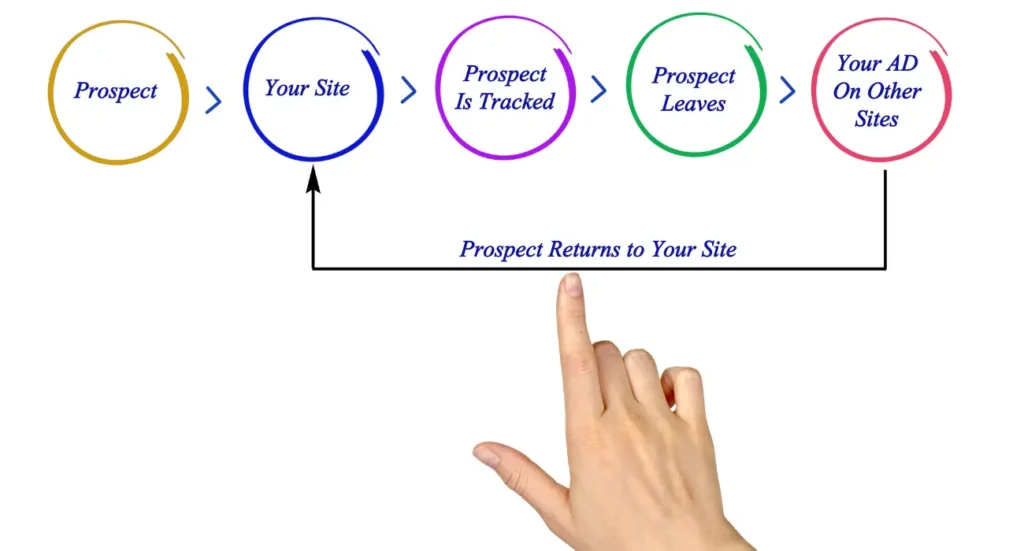
Set up pixel-based retargeting on Facebook, Google, and LinkedIn to serve ads specifically to people who visited your site, viewed pricing, or started but didn’t complete signup. These audiences convert 2-3x higher than cold traffic because they’re already familiar with you. Your effective CAC drops because you’re maximizing the value of the traffic you already paid to acquire.
Segment retargeting by behavior: someone who viewed pricing gets different messaging than someone who read a blog post. Use dynamic retargeting for e-commerce to show exact products viewed. Time-decay your retargeting, show different messages at day 1, day 7, and day 30 to match where prospects are in their decision journey.
6. Create Magnetic Lead Magnets That Build Your Email List
Email marketing delivers a $36-42 ROI for every dollar spent, among the highest of any channel. Building your email list through valuable lead magnets creates an owned acquisition channel with near-zero marginal cost per send.
Offer something genuinely valuable in exchange for email addresses: templates, calculators, checklists, industry reports, or exclusive trainings. Your lead magnet should solve one specific problem your ideal customer faces. A generic “newsletter signup” converts poorly; “Get our exact cold email template that books 30% of replies converts dramatically better because the value is concrete and immediate.
Nurture leads through email sequences that build trust and demonstrate expertise before pitching. By the time someone reaches your sales pitch after 5-7 valuable emails, they’re warm, educated, and far more likely to convert, at essentially zero customer acquisition cost beyond your initial content investment.
7. Partner with Complementary Brands for Co-Marketing
Strategic partnerships let you access another company’s audience at zero or low cost. Find non-competing brands targeting the same customer profile and create co-marketing campaigns that benefit both parties.
Co-create webinars, guest post exchanges, joint research reports, or bundled offers. A project management tool partnering with a time-tracking tool can cross-promote to highly relevant audiences. Each company acquires customers from the other’s email list and social following without paying for cold traffic.
Revenue-sharing or lead-sharing agreements formalize these partnerships. You might agree to pay $X per qualified lead sent by your partner, still far cheaper than your paid advertising CAC. The key is perfect audience alignment; your partner’s customers should naturally need your solution.
8. Optimize Your Paid Advertising for Lower CAC
If you’re running paid ads, ruthless optimization is essential to reduce customer acquisition cost. Most startups waste 30-50% of ad spend on poorly targeted campaigns, wrong audiences, or ineffective creative.
Start with campaign structure: separate campaigns by customer segment, product line, or funnel stage. Test multiple ad variations constantly: headlines, images, offers, and CTAs. Even small improvements in click-through rate or conversion rate dramatically impact final CAC. Use negative keywords aggressively in search campaigns to avoid wasting spend on irrelevant searches.
Track metrics beyond surface-level: cost per click, cost per lead, lead-to-customer conversion rate, and ultimately payback period. A channel that looks expensive at $100 cost per lead might actually be profitable if those leads convert at 40%, versus a “cheaper” channel at $50 CPL converting at only 10%. Always optimize for customer cost, not just lead cost.
9. Implement Account-Based Marketing for High-Value Targets
Account-based marketing (ABM) flips traditional demand generation by targeting specific high-value companies with personalized campaigns. Instead of casting wide nets hoping for fish, you hunt specific whales with custom messaging.
Identify your 50-100 best-fit target accounts, companies matching your ICP perfectly, where deal sizes justify personalized attention. Create custom landing pages, personalized outreach sequences, and targeted ad campaigns visible only to decision-makers at these companies.
ABM often has higher upfront costs per account, but if one enterprise deal is worth $100,000 annually versus $1,000 for typical customers, spending $5,000 to acquire it yields a 20:1 return.
The CAC math changes completely when the average deal size increases. Techdella’s B2B marketing services specialize in ABM plays, including 1:1 personalized pages, buying committee mapping, and sales enablement that shortens enterprise sales cycles.
10. Focus on Customer Retention to Lower Effective CAC
The fastest way to improve customer acquisition cost metrics is by reducing churn. If you acquire 100 customers monthly but lose 30, you’re running on a treadmill. Reduce churn to 10, and suddenly each acquisition dollar goes 3x further.
Invest in customer success: proactive onboarding, usage monitoring, and health scoring to intervene before customers churn. A customer success team preventing 20% churn effectively makes every acquisition 25% cheaper because more customers stick around to deliver LTV.
Track net revenue retention, the percentage of revenue from your customer base that remains or grows over time, including expansions and upsells. Companies with 120%+ NRR can afford higher CAC because customers expand after acquisition. Focusing purely on acquisition while ignoring retention is optimizing the wrong metric.
11. Build a Content Marketing Engine That Compounds
Content marketing creates assets that generate customers perpetually. A single high-ranking blog post can deliver customers for years at essentially zero marginal cost after creation. The initial CAC might seem high, but amortized over 36+ months, it’s often the cheapest channel.
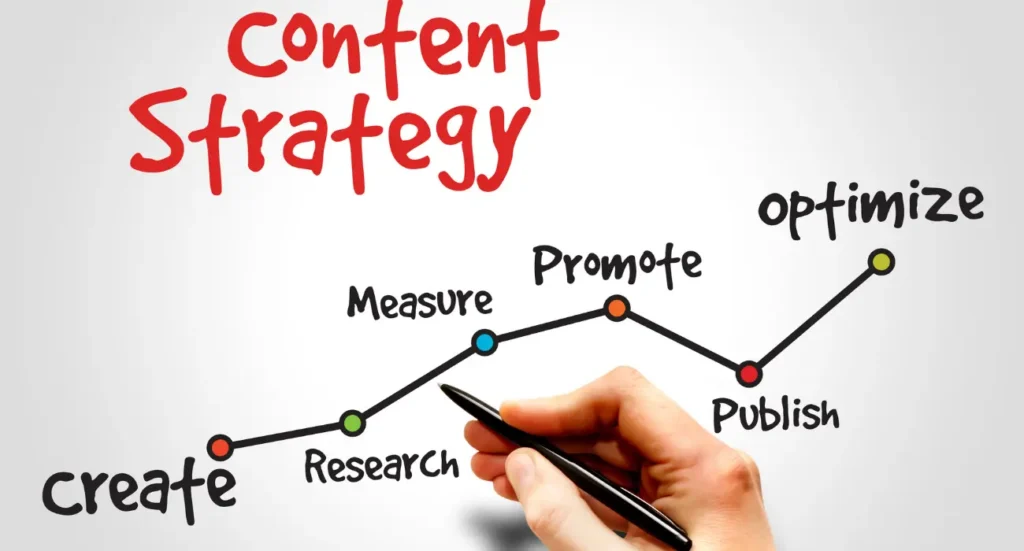
Create content targeting every stage of your customer journey: awareness (educational), consideration (comparison), and decision (solution-specific). Map keyword clusters to buyer intent and create comprehensive resources that become definitive industry references. Google’s 2026 algorithm updates heavily reward original research, expert insights, and content demonstrating genuine E-E-A-T.
Repurpose content across channels: turn blog posts into social content, webinars, email courses, and lead magnets. One piece of cornerstone content can fuel weeks of multi-channel marketing. This is where working with specialists like Techdella multiplies impact. We build entire content ecosystems where everything interconnects and compounds, not random blog posts that live in isolation.
Why Techdella Is Your Customer Acquisition Cost Reduction Partner
Reducing customer acquisition cost requires sophisticated multi-channel execution, proper analytics, and relentless optimization, capabilities most early-stage startups don’t have in-house. Techdella solves this by operating as your fractional marketing team focused obsessively on customer acquisition cost and ROI.
Unlike agencies that operate in silos, Techdella integrates SEO, content, paid acquisition, CRO, and lifecycle email into unified systems where everything compounds. We have instrumented complete attribution tracking so you see exactly which efforts drive customers at what cost. Our clients report CAC reductions of 40-60% within 90 days through systematic optimization of existing channels plus strategic addition of high-ROI tactics.
Frequently Asked Questions
What is a good customer acquisition cost for startups?
It depends on your industry, but your CAC should always be lower than your customer lifetime value.
How can I reduce CAC quickly?
Focus on improving conversion rates, targeting high-intent users, and optimizing your messaging.
Is SEO better than paid ads for reducing CAC?
SEO provides long-term results and helps reduce CAC over time, while paid ads deliver faster but more expensive results.
Final Thoughts
Learning how to reduce customer acquisition cost is one of the most important skills you can develop as a startup founder.
It is not about cutting corners; it is about working smarter. When you focus on the right strategies, you can grow faster without overspending.
If you want to build a cost-efficient growth system, Techdella is the partner you need. Our expertise in SEO, conversion optimization, and growth strategy helps startups scale sustainably. Are you ready to lower your CAC and grow smarter? Book a discovery call with us now.
Strategy, execution, and growth systems for founders building in Nigeria and scaling everywhere.
Join the first 50 founders building the next wave of African tech.
CAC vs LTV: The Startup Growth Metrics Every Founder Should Track
Startups often celebrate growth by counting new signups, website visitors, or social media followers. While…
Read →
How Long Does It Take to See Results From Growth Marketing?
Growth marketing results take structure, testing, and patience. Here is what actually determines how fast…
Read →
How to Launch a Successful Holiday Email Marketing Campaign
The holiday season is here and it’s an excellent opportunity for businesses to make sales.…
Read →